
Year-End Terminations: Wrongful Firing or Legal Dismissal in Colorado?
Understanding at-will employment myths, severance risks, and retaliation claims when
year-end firings cross the legal line in Colorado

Year-end layoffs and terminations spike every December, and not just because companies suddenly discover “budget issues.” For employees, being fired unfairly right before the holidays raises a big question: Is this legal—or is it wrongful termination in Colorado? If you’re wondering whether your termination crossed the line, a Denver employment lawyer can help cut through the excuses and focus on the facts.
Colorado is an at-will employment state, but that does not mean employers can fire people however or whenever they want. Especially at year-end, rushed decisions, sloppy documentation, and retaliation risks can turn a “legal dismissal” into a lawsuit fast.
Below, we break down what Colorado workers need to know—and where employers often mess up.
At-Will Employment in Colorado: What It Is (and What It Isn’t)
Let’s clear up the biggest myth first.
At-Will Employment Does Not Mean “Anything Goes”
Under Colorado law, most employees are considered at-will, meaning an employer can terminate employment for almost any reason—or no reason at all. However, “almost” is doing a lot of work here.
An employer cannot fire an employee for:
- Discriminatory reasons (race, sex, age, disability, religion, etc.)
- Retaliation for protected activity
- Exercising legal rights (like taking medical leave)
- Refusing to do something illegal
- Reasons that violate public policy or an employment contract
When year-end terminations happen fast, employers often forget this—and that’s when wrongful termination Colorado claims arise.
For a deeper dive on at-will exceptions, see the
Colorado Department of Labor and Employment’s overview:
Common Year-End Termination Red Flags
Timing matters. Getting terminated in December isn’t automatically illegal, but certain patterns should raise eyebrows.
Signs You May Have Been Fired Unfairly
If any of the following sound familiar, it’s time to call a Denver employment lawyer:
Sudden Performance Issues
- No prior warnings
- No performance improvement plan (PIP)
- Glowing reviews earlier in the year
That’s not “performance-based”—that’s retroactive justification.
Termination After Protected Activity
You may have a retaliation claim if you were fired after:
- Reporting harassment or discrimination
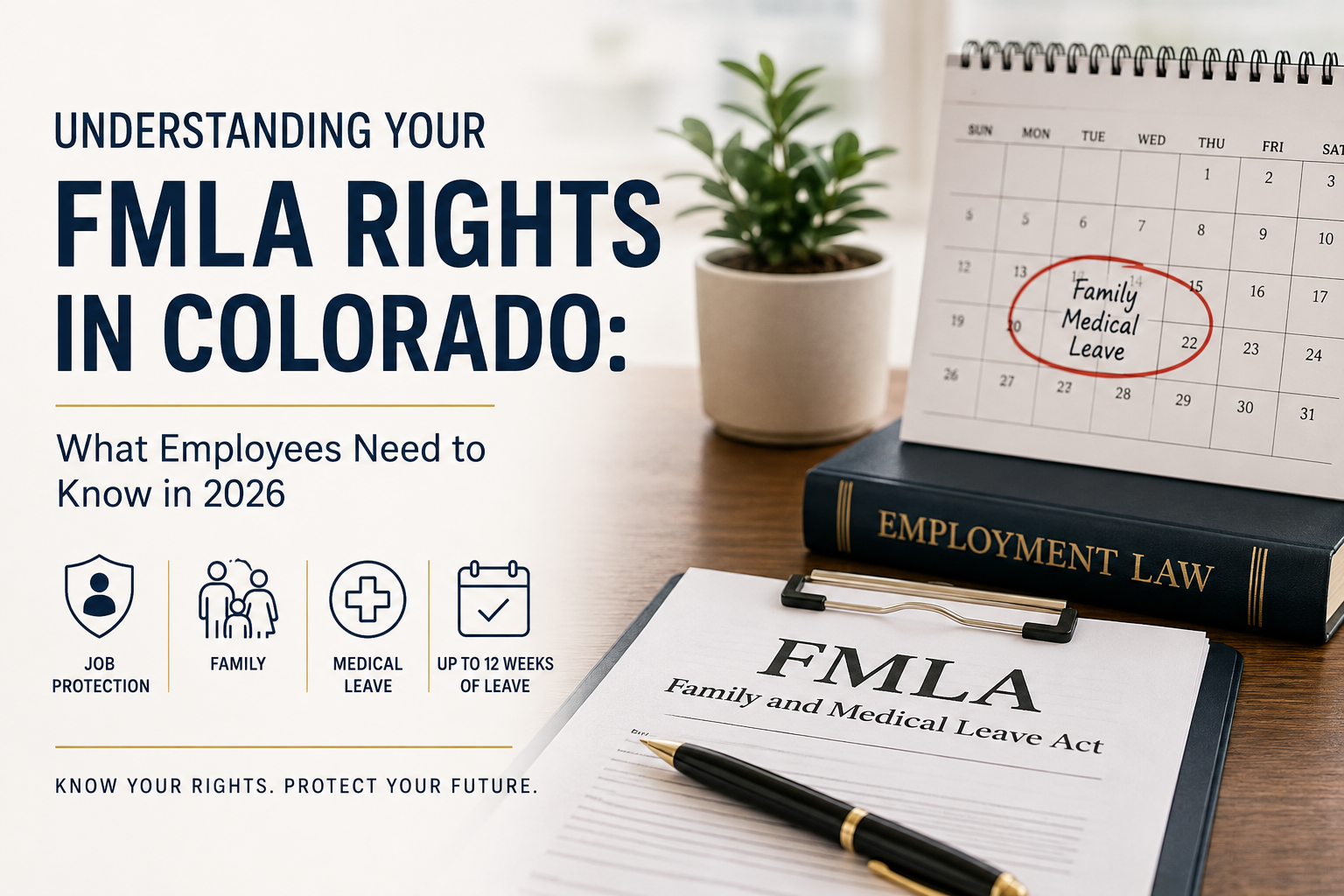
- Requesting FMLA or medical accommodations
- Filing a wage complaint
- Taking protected leave
- Participating in a workplace investigation
Retaliation claims are one of the most common—and expensive—mistakes employers make.
Learn more from the EEOC’s retaliation guidance.
Documentation: The Paper Trail That Makes or Breaks a Case
Documentation is where most employers either win—or implode.
Why Documentation Matters in Wrongful Termination Claims
Employers love to say, “It wasn’t personal.” Courts love paperwork.
Weak Documentation Looks Like This
- Performance issues documented after termination
- Generic termination letters with no specifics
- Inconsistent reasons given to HR, the employee, and unemployment
- Missing disciplinary records
If the story changes, credibility disappears.
Strong Documentation (From an Employer’s Perspective)
- Consistent performance reviews
- Written warnings with dates and signatures
- Clear policies applied evenly to all employees
- A termination reason that matches the paper trail
If you were fired unfairly and the documentation doesn’t add up, that’s leverage.
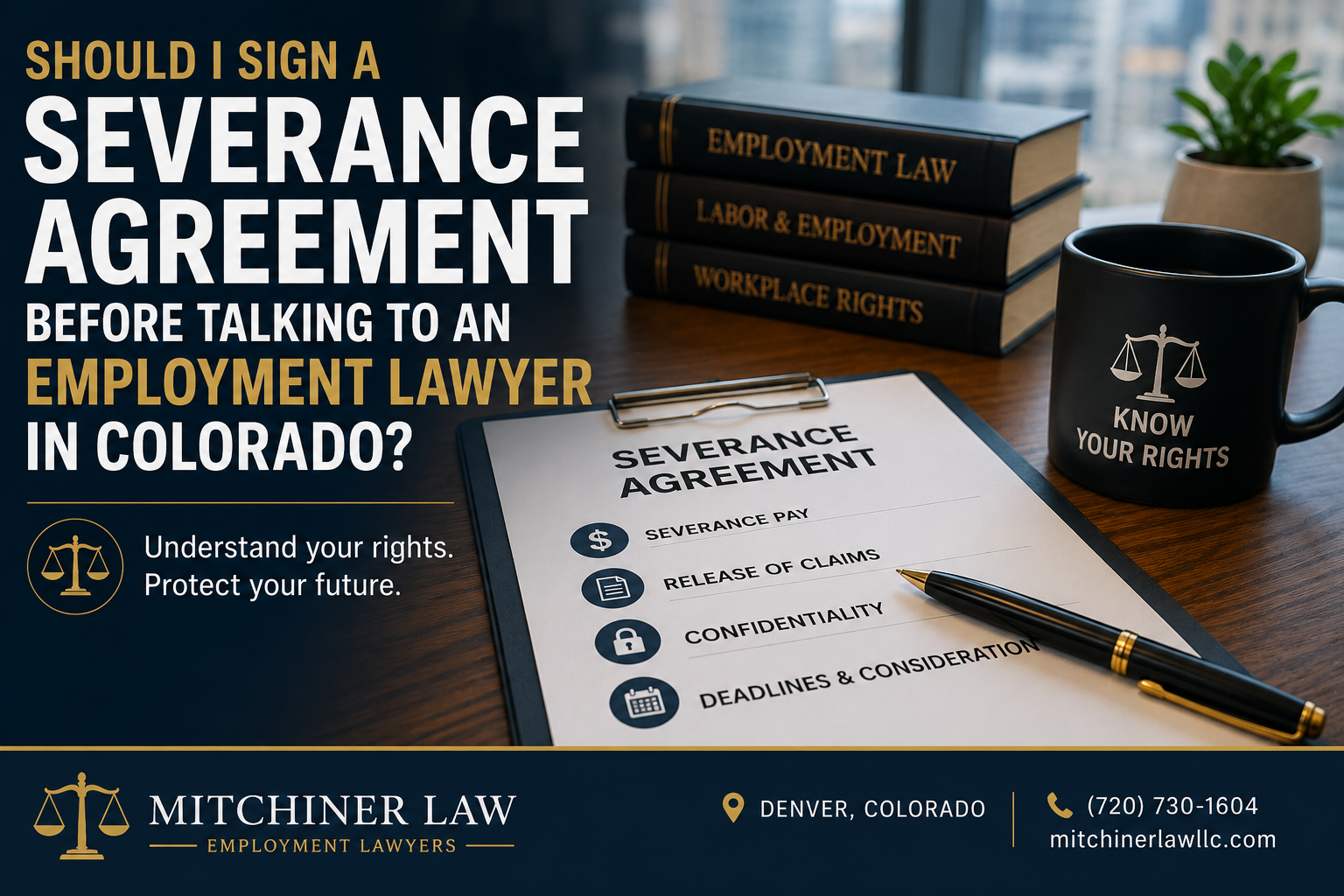
Severance Agreements: Not a Gift—A Trade
Many year-end terminations come with severance offers. Don’t mistake generosity for kindness.
What a Severance Agreement Really Means
In Colorado, employers are not required to offer severance. When they do, it’s usually for one reason: risk reduction.
What Employers Want
- A release of legal claims
- Confidentiality
- Non-disparagement
- No lawsuit later
What You Should Check Before Signing
- Are you waiving discrimination or retaliation claims?
- Are deadlines compliant with federal law (especially for age 40+)?
- Is the severance amount fair given your tenure and risk factors?
- Are non-compete or non-solicitation terms enforceable?
Once you sign, your leverage disappears. Always have a Denver employment lawyer review severance agreements before accepting.
You can review federal severance timing rules under the
Older Workers Benefit Protection Act (OWBPA):
Retaliation Risks Spike at Year-End
Year-end is prime time for retaliation claims—and employers know it.
Why Retaliation Is So Common in December
Companies often want to:
- Close complaints before the new year
- Avoid bonus payouts or benefit vesting
- Reduce headcount quietly
But firing someone who recently exercised a legal right is risky—no matter how it’s packaged.
Protected Activities Include
- Filing HR complaints
- Requesting reasonable accommodations
- Taking FMLA or paid sick leave
- Reporting wage and hour violations
- Participating in discrimination investigations
Colorado law is clear: retaliation is illegal, even in at-will employment.
What to Do If You Were Fired Unfairly in Colorado
If something feels off, trust that instinct—but back it up with action.
Next Steps After a Suspect Termination
- Request your personnel file
- Save all emails, reviews, and messages
- Write down timelines while they’re fresh
- Don’t sign severance immediately
- Speak with a Denver employment lawyer
Early legal guidance can mean the difference between a dismissed claim and meaningful compensation.
How Mitchiner Law Can Help
At Mitchiner Law, we focus on employment law cases where the facts matter—not corporate excuses. Whether you’re questioning a year-end termination, reviewing a severance agreement, or dealing with retaliation, we help Colorado employees understand their rights and options.
👉 Learn more about our employment law services:
Employment Law Services – Mitchiner Law
👉 If you believe you were wrongfully terminated, start here:
Wrongful Termination Lawyer in Denver
Final Thought: At-Will Is Not a Free Pass
Being fired at year-end is stressful enough. Being told “it’s legal because Colorado is at-will” is often wrong—and sometimes deliberately misleading. If you were fired unfairly, don’t assume the employer got it right.
Sometimes, the rush to close the books creates exactly the kind of mistakes the law doesn’t forgive.
Talk to a Denver employment lawyer who knows the difference.
Employment Law Insights – Denver