Understanding Your FMLA Rights in Colorado: What Employees Need to Know in 2026
Learn how the Family and Medical Leave Act (FMLA) protects eligible Colorado employees, what employers are required to provide, and what to do if you believe your workplace rights have been violated.
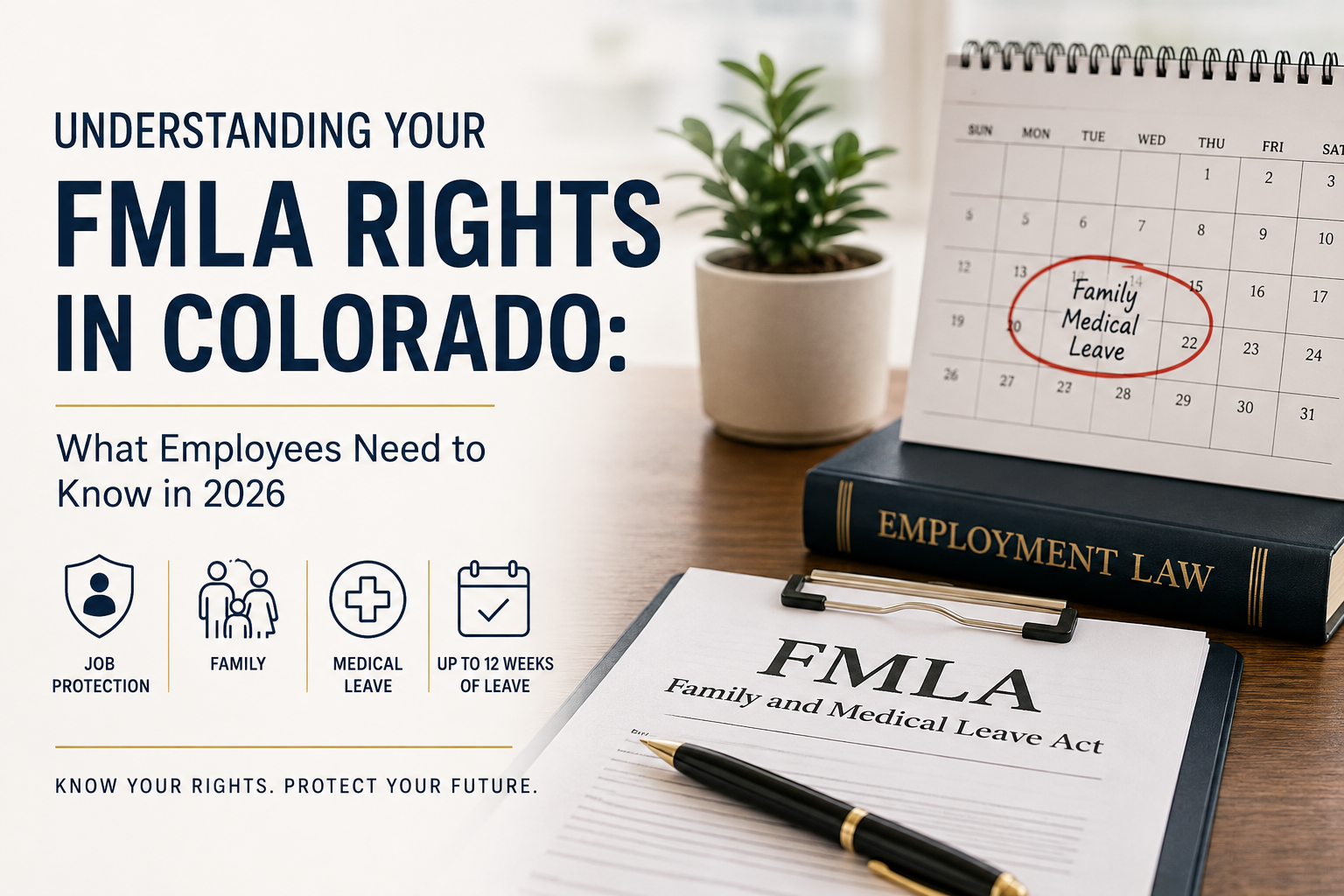
Unexpected life events happen. Whether you're welcoming a new child, recovering from a serious medical condition, or caring for a close family member, balancing work and personal responsibilities can quickly become overwhelming. Fortunately, many employees are protected by the Family and Medical Leave Act (FMLA), a federal law that provides eligible employees with job-protected leave for qualifying family and medical reasons.
However, many workers are unsure whether they qualify, how much leave they're entitled to, or what to do if an employer denies their request or retaliates against them for taking leave.
Understanding your rights under the FMLA is one of the best ways to protect your job and your future. At Mitchiner Law, we help employees throughout Denver and Colorado understand their rights under both federal and Colorado employment law when workplace disputes arise.
What Is the Family and Medical Leave Act (FMLA)?
The Family and Medical Leave Act (FMLA) is a federal law that allows eligible employees to take up to 12 weeks of unpaid, job-protected leave during a 12-month period for qualifying family and medical situations.
The purpose of the law is to allow employees to address important life events without worrying about immediately losing their jobs.
Under the FMLA, eligible employees may take leave for several qualifying reasons, including:
- Their own serious health condition.
- The birth of a child.
- Adoption or foster placement of a child.
- Caring for a spouse, child, or parent with a serious health condition.
- Certain military family situations involving active-duty service members.
While FMLA leave is generally unpaid, employers are typically required to maintain group health insurance benefits during the leave under the same terms that existed before the employee took leave.
The FMLA applies nationwide, but Colorado employees may also have additional rights under state employment laws depending on the circumstances.
https://www.dol.gov/agencies/whd/fmla
Who Qualifies for FMLA Leave?
One of the biggest misconceptions about the FMLA is that every employee automatically qualifies for leave. In reality, eligibility depends on several factors involving both the employee and the employer.
Generally, you may qualify if:
- You have worked for your employer for at least 12 months (not necessarily consecutive).
- You have worked at least 1,250 hours during the previous 12 months.
- Your employer has at least 50 employees within a 75-mile radius of your work location.
If any of these requirements are not met, the FMLA may not apply. However, other federal or Colorado employment laws may still provide protections depending on your situation.
Because eligibility can become complicated, particularly when multiple leave laws overlap, it's often helpful to speak with an experienced employment lawyer in Denver if you believe your rights have been violated.
What Is Considered a Serious Health Condition?
Another common misunderstanding is that only major surgeries or extended hospital stays qualify for FMLA leave.
In reality, a "serious health condition" covers a much broader range of medical situations.
Examples may include:
- Cancer treatment
- Recovery after surgery
- Pregnancy and childbirth
- Serious complications related to pregnancy
- Mental health conditions requiring continuing treatment
- Chronic illnesses such as diabetes or epilepsy
- Conditions requiring multiple treatments by healthcare providers
- Inpatient hospital care
Whether a medical condition qualifies depends on the specific facts and the medical documentation provided.
Employees should always provide timely and accurate medical certifications when requested by their employer.
Can My Employer Deny My FMLA Request?
Employers are allowed to deny FMLA leave when an employee does not meet eligibility requirements or when the requested leave does not qualify under the law.
However, employers cannot deny leave simply because it is inconvenient for the business.
Likewise, employers generally cannot:
- Discourage employees from requesting leave.
- Delay processing leave requests without reason.
- Refuse qualifying leave.
- Count protected leave against attendance policies.
- Punish employees for requesting leave.
If your employer improperly denies leave that should be protected under the FMLA, you may have legal rights worth exploring.
Can My Employer Fire Me While I'm on FMLA Leave?
This is one of the questions employment attorneys hear most often.
Generally speaking, employers cannot terminate an employee because they requested or used protected FMLA leave.
However, that does not mean every employee on leave is immune from termination.
For example, an employer may still make legitimate business decisions that affect employees on leave if those decisions are unrelated to the leave itself, such as company-wide layoffs or documented performance issues that would have resulted in termination regardless of the leave request.
The key question often becomes why the employment action occurred.
If an employee is terminated shortly after requesting leave, refuses to cancel approved leave, or receives unexplained discipline immediately after returning to work, those circumstances may warrant closer review.
Understanding FMLA Interference vs. Retaliation
Many employees use the terms interchangeably, but they are actually two separate legal concepts.
FMLA Interference
Interference occurs when an employer unlawfully prevents or discourages an employee from exercising their FMLA rights.
Examples include:
- Refusing to provide required paperwork.
- Telling employees they cannot take qualifying leave.
- Requiring employees to work while on protected leave.
- Misrepresenting eligibility requirements.
- Failing to restore employees to their previous position after leave.
FMLA Retaliation
Retaliation occurs after an employee exercises protected rights.
Examples include:
- Termination
- Demotion
- Reduced hours
- Lower pay
- Negative performance reviews
- Denied promotions
- Hostile treatment by supervisors
Retaliation claims often depend on timing, documentation, and the employer's stated reasons for its actions.
What Colorado Employees Should Know About Workplace Retaliation in 2026 (April 2026 Blog)
How Colorado Employment Law May Affect FMLA Cases
Although the FMLA is a federal law, Colorado employees may have additional protections depending on their specific circumstances.
For example, leave requests sometimes overlap with issues involving:
- Disability accommodations
- Pregnancy discrimination
- Wage disputes
- Workplace retaliation
- Wrongful termination
- Reasonable accommodations
When multiple employment laws apply at the same time, determining your legal rights can become much more complex.
Understanding how these laws work together is one reason many employees seek legal guidance before making important workplace decisions.
Understanding Colorado's Equal Pay for Equal Work Act: What's Changed in 2025
Protect Your Rights Before Workplace Issues Escalate
Understanding your rights under the Family and Medical Leave Act is the first step toward protecting your job and your future. While many employers follow the law, misunderstandings, improper leave denials, or retaliation can and do happen. Knowing when you're protected—and recognizing when your rights may have been violated—can make all the difference.
If you believe your employer has improperly denied FMLA leave, retaliated against you for requesting leave, or violated your rights under Colorado employment law, it's important to understand your legal options before making your next move.
At Mitchiner Law, we help employees throughout Denver and Colorado navigate complex workplace issues involving family and medical leave, workplace retaliation, wrongful termination, wage disputes, and other employment law matters.
If you have questions about your rights or believe your employer may have violated federal or Colorado employment laws, contact Mitchiner Law today to discuss your situation and learn how we may be able to help.
Employment Law Insights – Denver